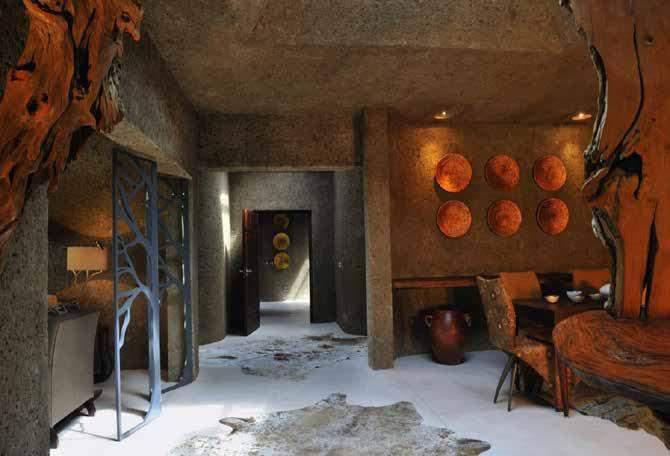
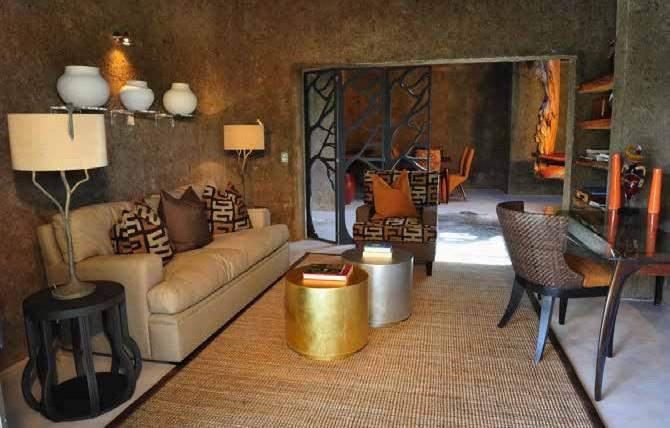
Earth Lodge in South Africa’s northeast corner was among the first deluxe hospitality venues to choose ancient natural building principles for its construction and caused something of an architectural stir when this Sabi Sabi Private Game Reserve lodge arrived on the scene. With its unvarnished, low-set exterior and environmental building approach that reflected its natural surroundings, it was ahead of its time. Fodors travel guide described it as :
“A cross between a Hopi cave dwelling and a medieval keep, but with modern luxury”
Fast-forward a few decades and its winning combination of luxury hospitality and natural building principles within a sustainable conservation framework has garnered global acclaim and helped pave the way for others in the industry. The approach to the lodge through the bush gives visitors almost no visual clues as to its existence until seemingly out of nowhere a stone path appears, hemmed by rough grass and scrub. The path widens to reveal a foreground of river and boulders that lead the eye to the blue-grey haze of the far-off horizon. Very much like the wildlife whose habitat the lodge shares, the building reveals itself only when you’re almost upon it. That was the whole point. True to its name and its architectural ethos, Earth Lodge is virtually folded into the ground and hidden from view. At first glance there’s not much to show but the roughly executed exterior offers no hint of the surprise that awaits behind the massive wooden front door.
Architect Mohammed Hans drew his inspiration from the earth shelters of the Middle Ages. In those days, many buildings were excavated into the slope of the land. Soil and plants were packed onto the roofs for all kinds of reasons, including the most practical ones: cost and the availability of building materials, insulation, and protection from outside attack from both enemies and the natural elements. Hans borrowed from natural earth-building principles and reworked them to satisfy the demands of modern comfort and convenience. So while Earth Lodge’s design is organic from its foundations to its mud-darkened walls and grass-tufted roof, this natural building is unmistakably contemporary.
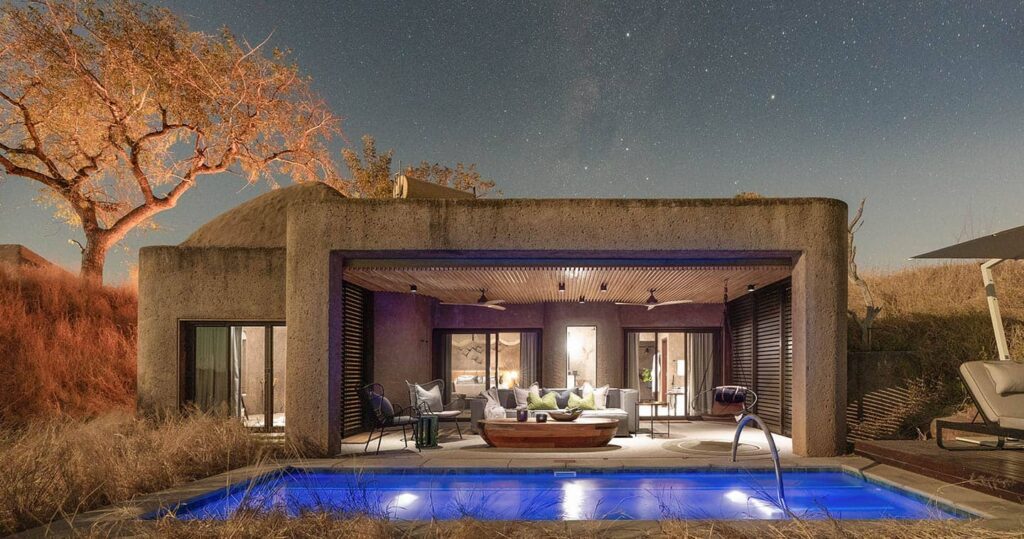
Naturally lovely
The original interior décor is the work of designer Stephen Rich and Sabi Sabi owner Jacqui Loon, which has had updates over the years. The look fuses earthy elements with luxurious finishes. The language of wood, soil, and natural fibers is lifted with metallic finishes in a nod to Africa’s mineral wealth and the gold rush that opened up the broader region more than a century ago. Natural sisal rugs are enhanced with silver or gold trims and flung over simple, ivory-screed floors. Nguni hides have been given a glamorous shimmer with flashes of copper and platinum. Sculptor Geoffrey Armstrong crafted bespoke light fixtures and furniture using fallen trees sourced on the reserve and painstakingly reassembled on-site. He re-assembled each branch and twig to cast spectacular chandeliers that mimick the real thing and tree trunks were re-invented as sculptural works of art. The final effect is at once straight from nature and impossibly glamorous.
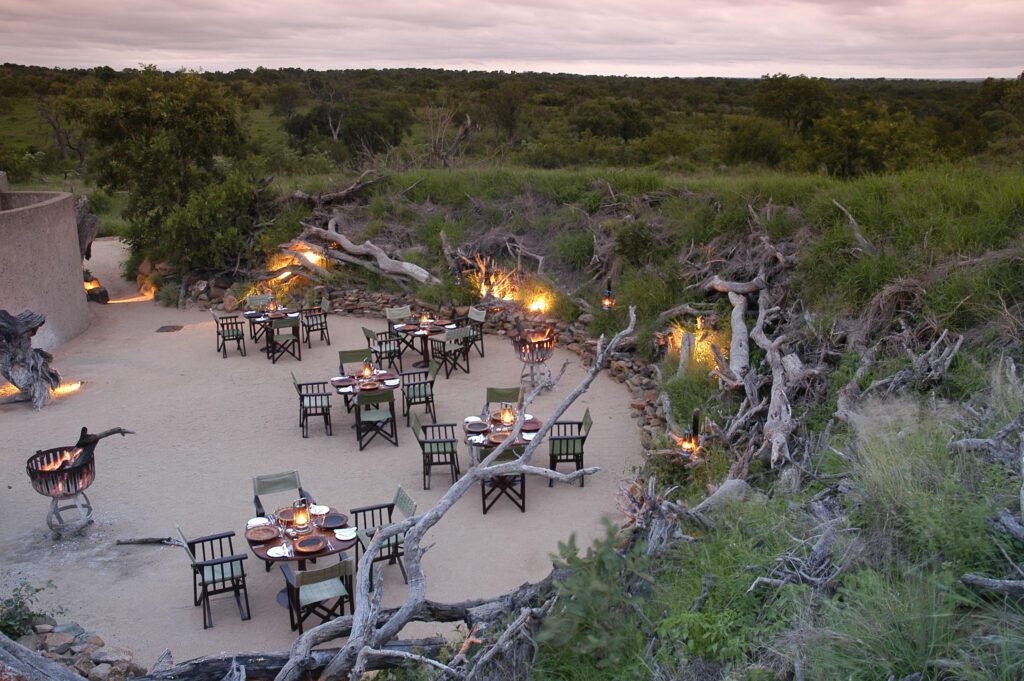


Beneath the lodge’s luxurious exterior lies a depth of purpose. As a member of the Sabi Sabi Group, this and other properties in the company stable have wildlife and environmental conservation at their core. Sabi Sabi was one of the first hospitality companies to recognize the essential role of the private sector in conservation. The model they follow is a balancing act of sustainable ecotourism, conservation, and community involvement. Sabi Sabi was one of just a handful of properties, and the only five-star lodge in its day, to receive South Africa’s first Fair Trade in Tourism trademark in 2004.