

A former Capetonian and previous décor editor of Fair Lady Magazine spent years travelling and living around the world before she found her way back to Africa. Pauline de Villiers Brettell now lives in the small Moroccan town of Assilah near Tangiers where she revamped Dar Ambrosia, a newly opened riad in the heart of the medina.

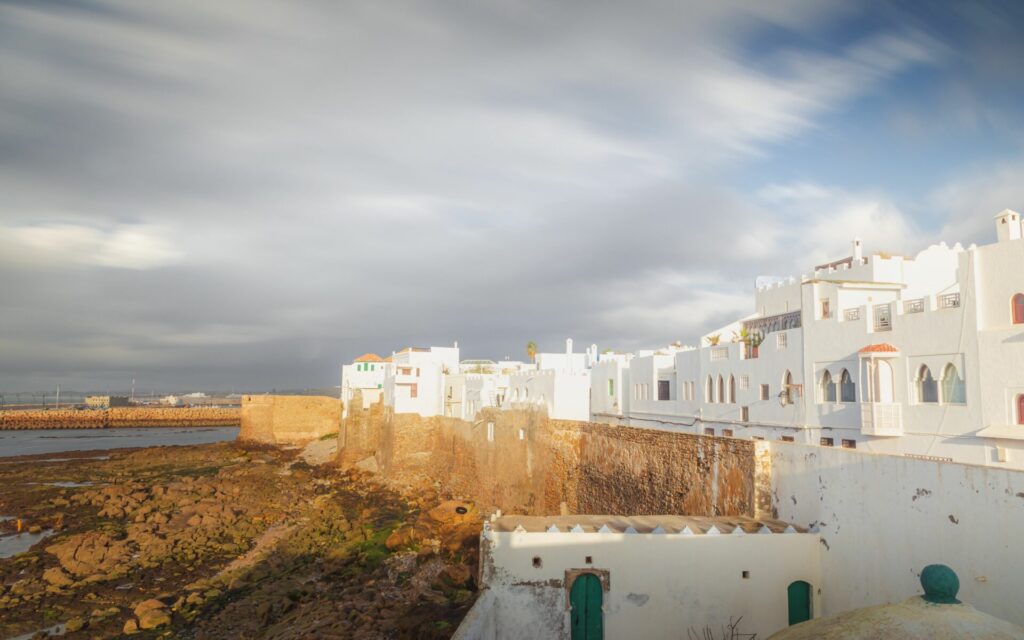
“While doing a bit of pre-holiday research for our first family trip to Morocco I stumbled across Assilah with its murals in the medina and houses built within touching distance of the Atlantic, and was determined to make this the end point of our epic Moroccan tour that had started in Marrakech. We were living in Wales and it was a wonderful feeling to be back in Africa – albeit on the complete opposite side of the continent. We were drawn to Assilah and simply felt comfortable here. There’s something magical about being rooted in Africa while being able to see the shoreline of Europe on a clear day.
We now have some land in the countryside about half an hour’s drive on a dusty road out of Assilah. Buying a rural property here is definitely not for the faint hearted. Finding our place in the Moroccan sun involved numerous trips and endless conversations over cups of mint tea. This is where our Moroccan dream will hopefully come to fruition one of these fine days, along with the olive, almond and pomegranate trees we’ve planted. When we do get around to building our house I plan to embrace all that is beldi – a word in Morocco that describes anything traditional and handmade – and to use local construction methods and materials so our home blends with the landscape on every level. A personal dream project is to grow flowers that can be used for natural dyes and to combine the work of local weavers with a dye studio. This is the first time I’ve put it out there – time to manifest!

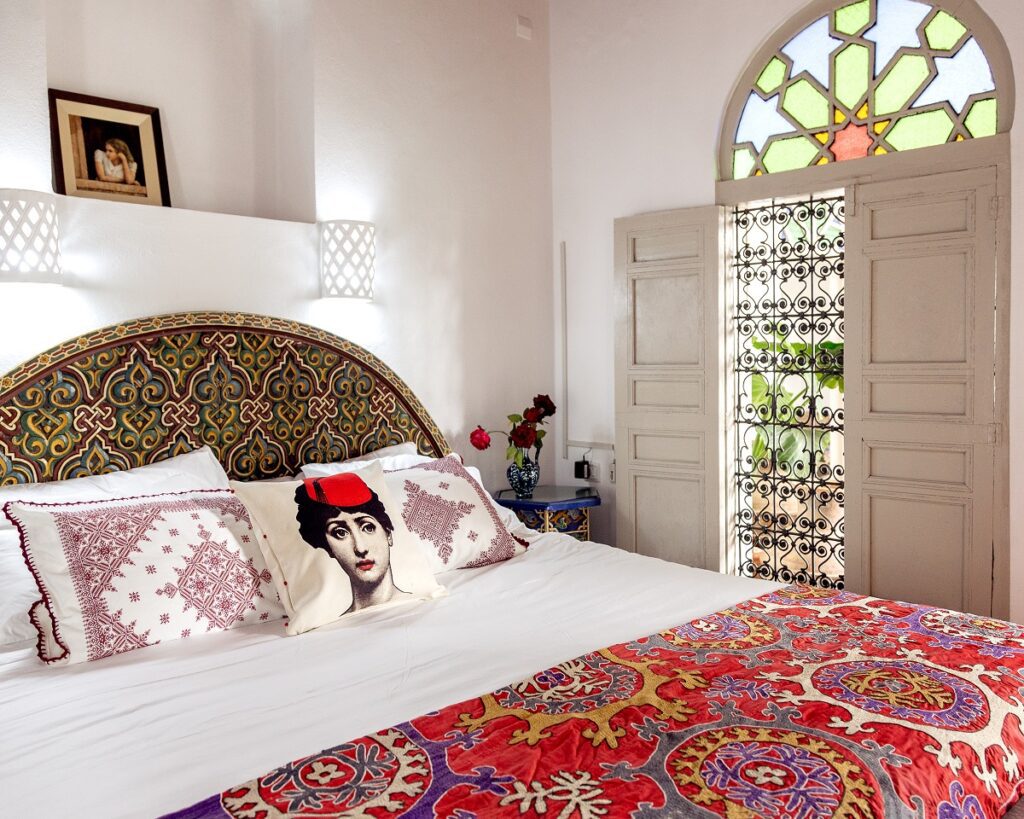

My town base centres around Dar Ambrosia, which is very much a joint project. The property belongs to a dear friend who hadn’t lived in it for some time, but it was his vision that originally built the dar. Every time I walked through the beautiful wooden door I itched to get stuck in and reinvent what had become a neglected space. One sunny day in the medina, we sat down over a strong Moroccan nous-nous coffee, discussed the details and shook hands. The key was handed over to me and it was time to put my money where my mouth was and get to work! And work we did – for six months until it opened to guests in summer 2023. Even so, I suspect this might be one of those projects that never ends as I’m constantly refining the details.
After living in Wales and it was a wonderful feeling to be back in Africa. There’s something magical about being rooted in Africa while being able to see the shoreline of Europe on a clear day.
Decorating is about telling a story and developing a personality. My guiding principle for decorating this space was very much a case of clearing out and letting it breathe before building up the colours and textures again. The joy of Dar Ambrosia is the fact that the owner is a collector so the pool of art and artefacts I could dip into was a joy. There were some elements already in place such as bathrooms and kitchen surfaces and tiles. Instead of fighting them I chose to embrace and amplify them. Hence the black kitchen and the bold colours in the bedrooms that reflect the bathroom tiles which were already in place.


Dar Ambrosia embraces the 25-mile menu concept. The pantry is stocked with local honey, oils and other produce; in time we hope to grow enough olives for an annual supply of home grown oil. Most importantly, I wanted the space to be a social one where laughter and conversations happened around the long table far into the night, where families and friends spend time together and make memories. There are areas for guests to gather and spaces to be alone, even in a full house. The keywords are share, relax, recharge. We’d like Dar Ambrosia to be a place that transports guests out of their everyday so that it really feels like a holiday, and reflects and celebrates its location without stepping into cliché.
My personal decorating style is eclectic and layered. There’s always some green involved – probably an olive green – and quite possibly strong orange somewhere. And books. And carpets. As much as I try to keep things simple, my style is about those layers and creating little vignettes to punctuate the space. I like reinventing things or giving things new life simply by reframing and creating pictures that catch your eye as you walk through a space.
For Dar Ambrosia I had two main considerations when it came to colour. The first was removing or paring back the colour because it was such a busy space with a lot of inherently coloured and patterned Moroccan elements like the doors and tiles. Where possible I tried to give all that colour and pattern a more neutral frame by introducing white walls and taupe woodwork. Having reduced the palette I could reintroduce colour and pattern in a more curated way using elements that were integral to the building.

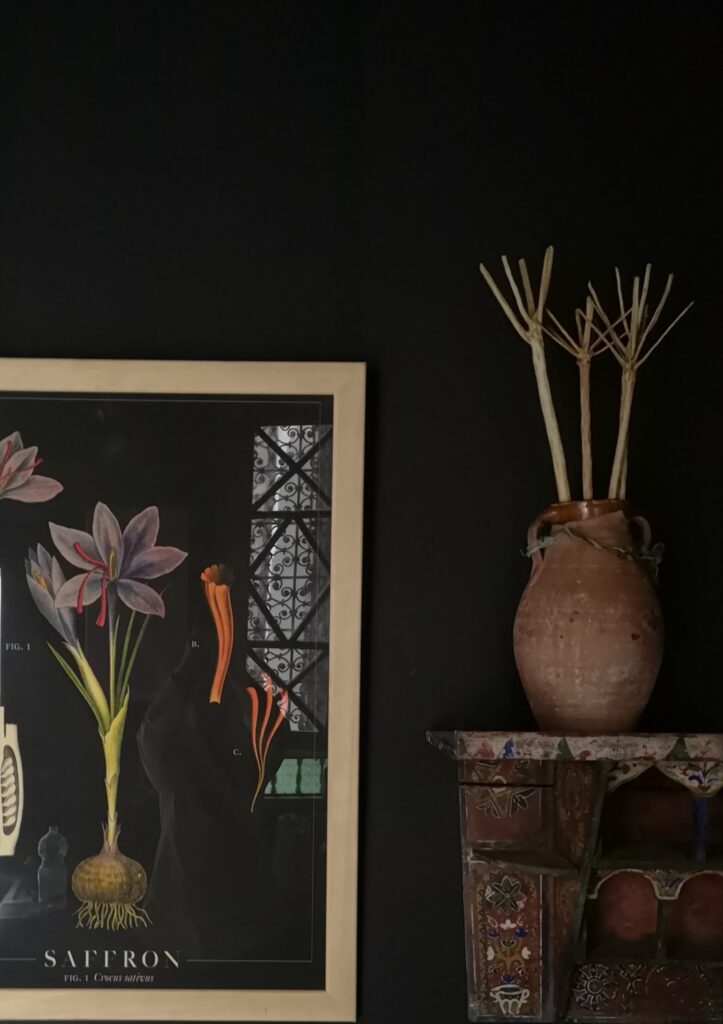
The most difficult thing about working on a decor and building project here in Morocco is definitely that you can’t just walk into a shop and buy what you want straight off the shelf, especially paint. Sourcing paint colours was a challenge – not to mention getting the same colour a week later when you run out of it. We don’t have the luxury of being able to mull over a beautifully curated colour chart safe in the knowledge that the product we choose will live up to expectations.
My favourite parts of house are the blue dining room and the black kitchen. In the dining room we wrapped colour around the entire room including the ceiling, which was a first for me. Actually, I think the kitchen is my favourite. Or possibly the super-sized date frond lampshades…”
Pauline de Villiers Brettell is a South African writer and textile designer.
Images: Dar Ambrosia