I have an elderly friend whose extended family used to safari annually to a remote beach in northern Mozambique for blissful holidays that went on for months. That was back in the ’60s, when there weren’t many hotels or shops and very little in the way of roads either. It meant three or so days of chugging along in their biggest farm truck packed with everything they might possibly need for the duration. One year her aunt loaded a crate of laying hens to provide fresh eggs. It sounds like the perfect holiday. Nowadays the azure coast around the historic little town of Inhambane is easier to reach and has shops and markets enough to supply visitors with anything they need.
A spot of history
Only 540km north of Maputo, Inhambane is one of the oldest settlements on Africa’s Swahili coast. Dhows traded here as early as the 11th century. When Vasco da Gama rounded Africa in the late fifteen hundreds, the fleet threw anchor in Inhambane’s large natural bay to replenish stocks. da Gama took an immediate liking to the area and named it Terra de Boa Gente, ‘Land of the Good People’. The Portuguese eventually established a permanent trading post and settlement in 1534 and by 1560, Inhambane became the site of the first Jesuit mission to southeast Africa. The port grew into a trading centre in the 18th century, under mostly Indian control. Gradually the town grew and the cathedral and the first mosque were built. In the 20th century Inhambane lost out when Lourenço Marques (now Maputo) took over as the capital. Inhambane settled into pleasant, minor provincial status. That much hasn’t changed, but it still harbours one of the largest working fleets of dhows on the Swahili coast, which stretches way up the Mozambique Channel past Zanzibar. You can take a dhow across the bay from Inhambane to Maxixe when you go exploring – so much more interesting than driving.
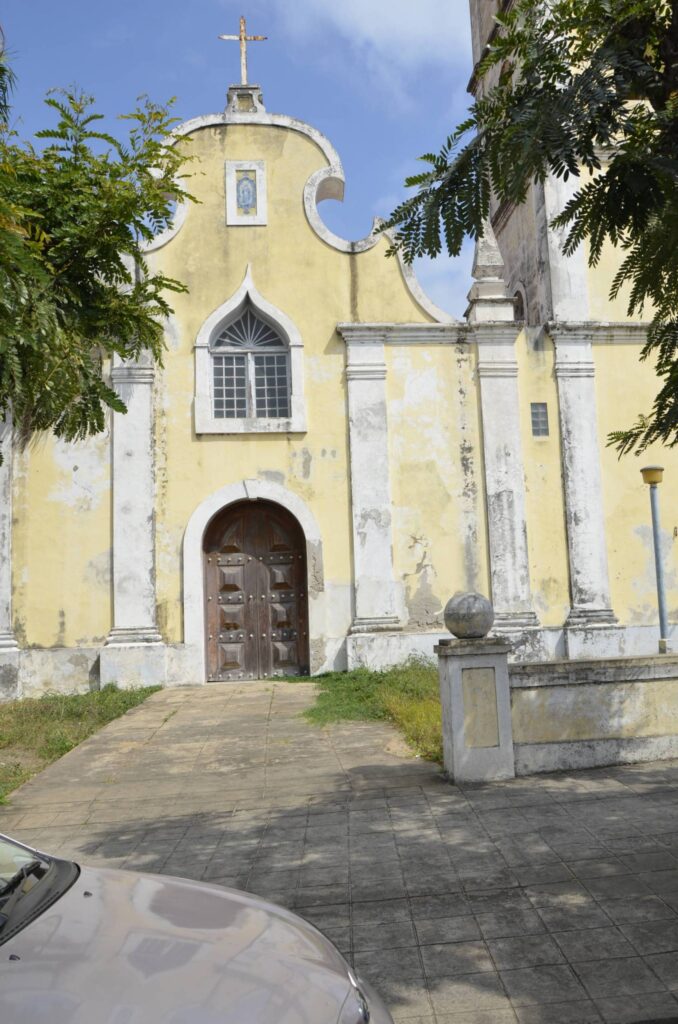
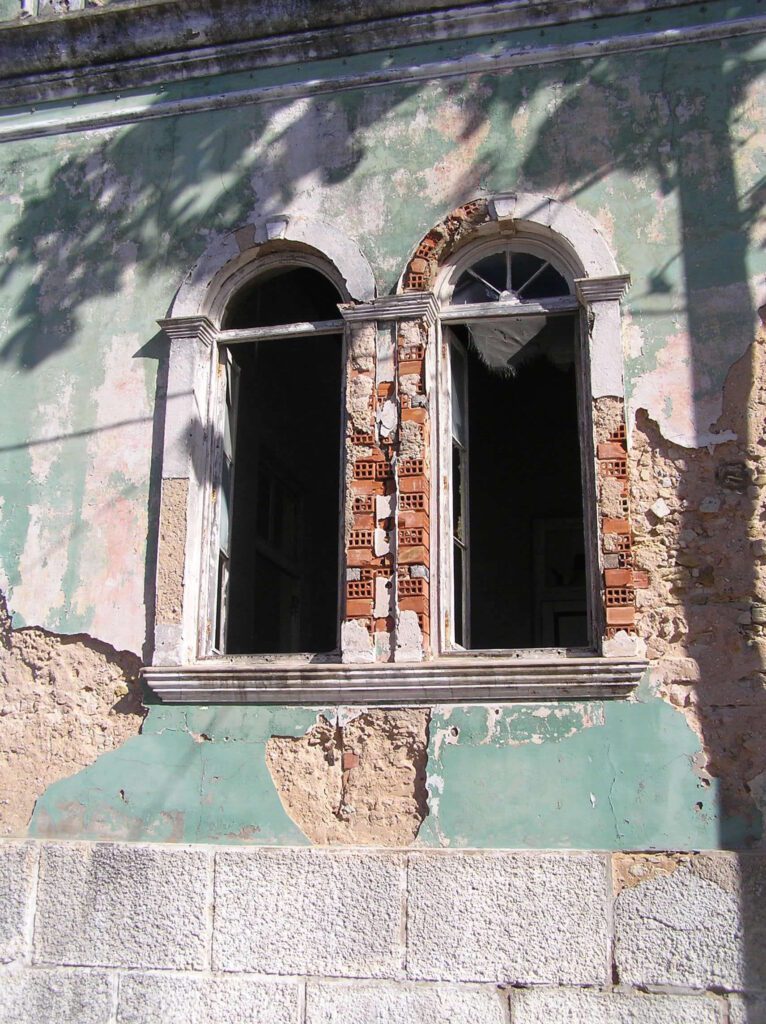
A wander around Inhambane must include a visit to the Cathedral of Our Lady of Conception, which was renovated a few years ago with the help of the Irish Government. It’s interesting to dawdle around the old Portuguese cemetery and to visit the small but venerable white mosque. Photographers and other dreamers will appreciate the faded beauty of the architecture in the old quarter where you can still catch a faint glimpse of a bygone era in the tattered remnants of high-ceilinged Portuguese colonial buildings. There are also some prime examples of Art Deco architecture around town. The broad streets and some official buildings, like the naval academy, have somewhat survived. Indian shops with dusky interiors and strings of mango leaves over the lintel still trade in anything and everything. You’ll find sun-bleached religious cards depicting the Catholic Saints alongside dusty bottles of cologne and giant plastic flagons of imported Portuguese vino verde. You can visit the modest museum, spend a few hours shopping at the Mercado Central, and end with an espresso on the terrace of Casa do Capitao Hotel. This cool haven on Av. Maguiguana is one of the oldest buildings in town. It once housed the Port Captain but is now a neat hotel overlooking the bay where Da Gama threw anchor centuries prior.
Getting there
To get there by road from South Africa, take the N4 via Komatipoort to the Lebombo-Ressano Garcia border. You’ll need Metical (the Mozambique currency) for toll fees. You can change money before you cross into Mozambique. Either use a bank or swap currency with the informal traders who gather at the major filling stations in Komatiepoort. You’ll know them when you see them. If you’re not sure, the petrol attendants will point them out.
Steel yourself for the touts that swarm in a wave the instant you pull up on the Mozambique side. Visitors are strongly advised not to hand over their passports or other papers to border touts. These locals are in cahoots with the border officials. They’re persistent fellows. They follow you boldly into border control and try anything to earn a fee: fill in your forms, lend you a pen… One pressed himself sweatily over my shoulder and helped me spell my own name aloud from my passport as I completed a form (why, thank you, helpful youth). Use your smarts. Keep wallets and phones in zipped handbags, mind your valuables, and simply refuse to engage verbally. Becoming temporarily deaf and mute works best. Do not be fooled into buying fire extinguishers or other so-called compulsory items from border touts. The Automobile Association publishes a list of legal requirements for driving in Mozambique. If it’s not listed, you don’t need it.
Travel Tips
Do arrive at the border with all the necessary paperwork.
Do obey the rules of the road.
If stopped by traffic police Do Not offer (or agree to) a bribe.
Do Not hand over your driving license. Always keep a firm hold on it when asked to present it. Do Not allow an officer walk away with it because it is likely to either vanish completely or be ransomed back to you.
Do Not make a U-turn at a traffic light, regardless of whether or not there’s a sign. It is always forbidden.
Do Not take photos of people without asking. It’s likely they’ll want you to pay and will get shouty, or worse, if you snap a photo without agreeing to a fee beforehand.
Once through the border, stay on the EN1 (a natural extension of the N4) towards the capital, Maputo. Slip onto the new ring road that puts you on the route north. Drive north for about 500km. Around halfway you’ll find the town of Xai Xai. You’ll know it by the rash of fast food outlets and smart new filling stations. These are handy pit stops and have clean-ish toilets. When you reach Inhambane, road signs will direct you towards Tofo and Barra on the coast. It really is just about that simple.
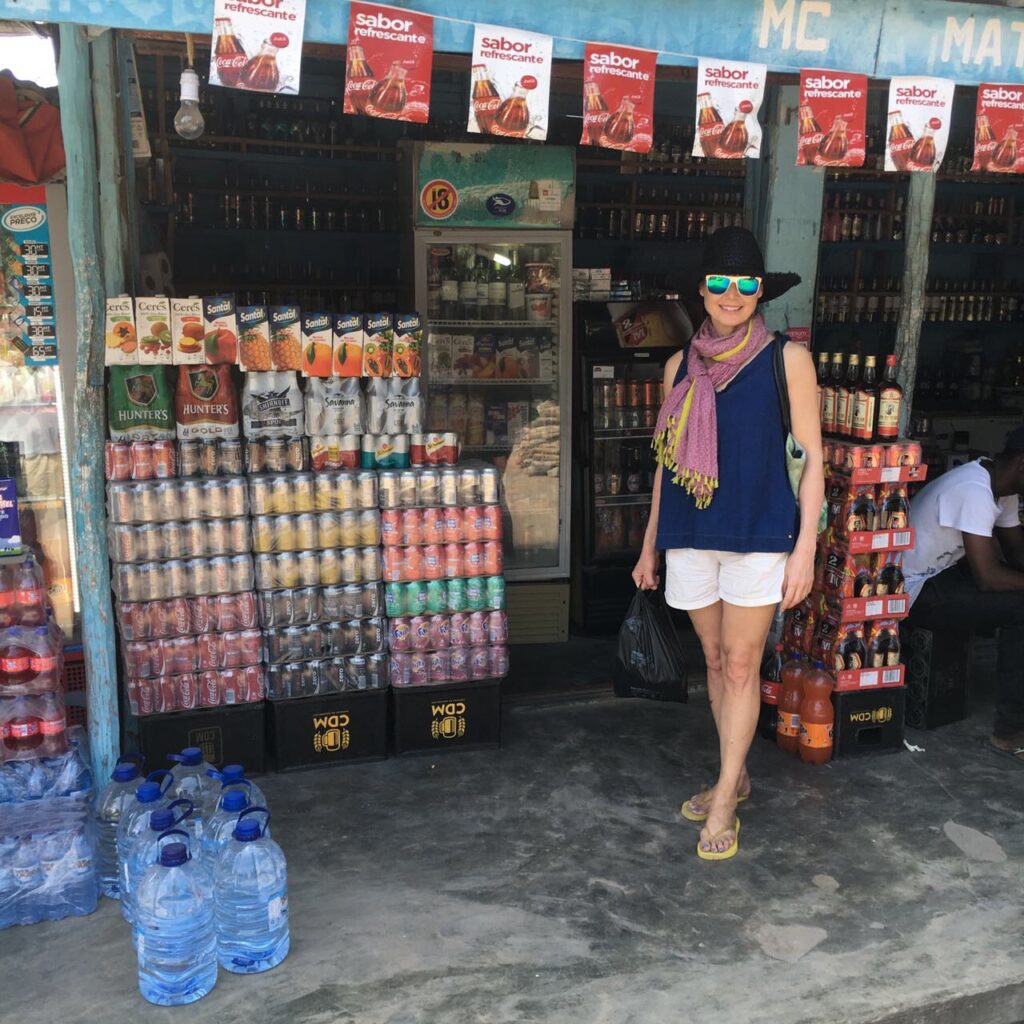
The main routes are tarred and in good condition. As Maputo falls away, the scene becomes ever more rural. To experience the real charm and beauty of Mozambique, stop at the roadside markets selling the famously hot peri peri sauce that first inspired Nando’s, as well as fruit and crafts. Traffic police in dazzling white uniforms loll under every second tree. The speed limits are erratic and signs are easy to miss or just conveniently missing. Stick exactly to the rules or expect to be pulled over and fined. Maybe it will happen even if you do stick to the rules. Fining tourists is one of the few remaining funzies revenue sources in the country and simply by virtue of your foreignness you’ll be seen as rich pickings. It’s worth joining DriveMoz a social media affiliation of travellers that acts as an eyes-and-ears network for people travelling by road in Mozambique. It’s an excellent way to get up-to-date advice and help if you need it en route.
Many Tofo regulars split the journey into a day-and-a-half, with a one-night stop each way. The sleepover can be done on the South African side in Komatiepoort with an early morning start to make the border crossing. Some prefer to spend the first night on the Mozambique side. The advantage of this is that you get the awful border out of the way, and get to enjoy your first evening in Mozambique en route. You arrive in Tofo the next day in time for a late lunch and a dip in the sea. Since discovering the Blue Anchor Inn about 50km north of Maputo – and miles from the sea – I’m sold on its post-colonial charm. Owner-run by former Kenyans, Paul and Liz Hallowes, it reminds me of a more gracious era. The food is good too. Another gem is Zona Braza Lodge, at Chizavane just north of Xai Xai. Set in dune foliage alive with birds, it’s right on the ocean with no neighbours. This delightful and surprisingly economical stopover might just lure you back for a longer stay.
Travel by air to avoid the very real aggravation of the border rife with graft and chaos, and also gain two days of beachside fun. Airlines fly out of Johannesburg and Nelspruit’s KMIA. On the downside, flights are expensive and you miss out on a road trip that gives glimpses into the country’s rural life, as well as the chance to meet most members of the Mozambique traffic police department who are eager to say olá and eye your melting coolbox of car snacks.
Scent of the sea
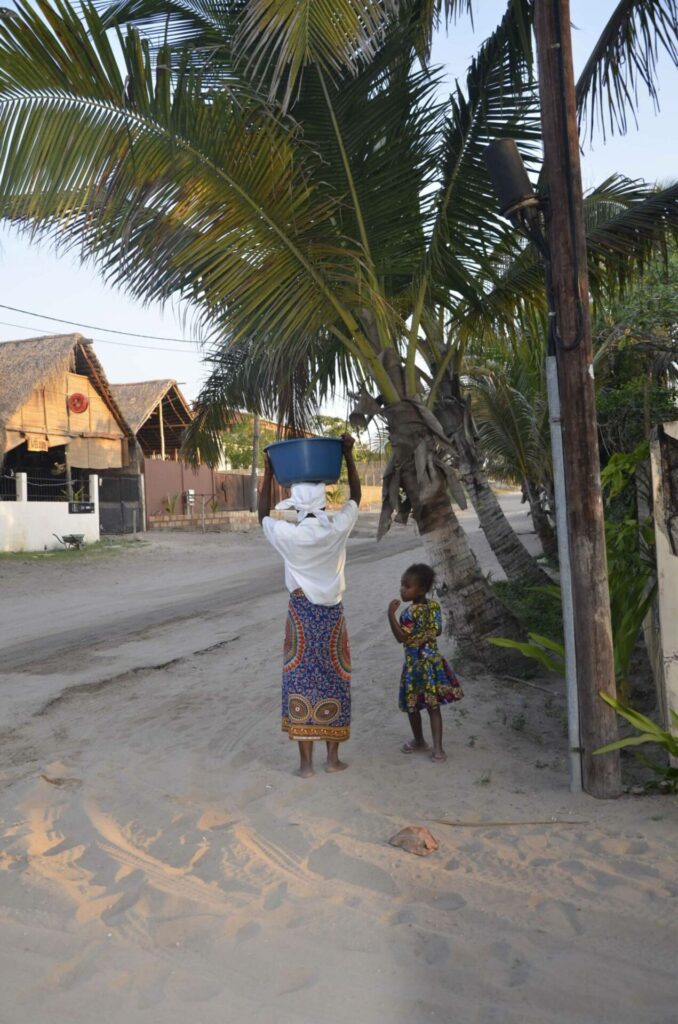
As you arrive at Inhambane and set off down the final 20km stretch that takes you to Tofo’s wide crescent beach, village life slips under your skin. There’s a baker loading dough into a wood-burning oven. The tradition of outdoor baking ovens and bread recipes was gifted by long-ago Portuguese settlers. The flour-dusted, subtly chewy pao is impossible to replicate in a conventional oven back home. Further on, a carpenter smooths planks with a hand-plane in an open-air workshop. A gaggle of small children skitters down the road steering homemade toy cars. One has a buckled tin plate with a chipped enamel pattern of pink roses nailed to a long stick that spins ahead of his dusty feet. Older boys play soccer on a raw patch. Women hang washing, pound cassava, grate coconut and keep an eye on glossy, naked toddlers. Goats are tethered to stakes; black pigs snout through cabbage patches. You see market gardens superbly verdant with every sort of salad and vegetable. All the fresh produce sold in the markets and used in the restaurants is grown right here. And everywhere, for miles and miles, are the waving coconut palm groves planted nearly a century ago by Portuguese farmers. They’re now a source of food, shelter, a variety of construction materials, baskets, mats, furniture, jewellery and more.
The beach
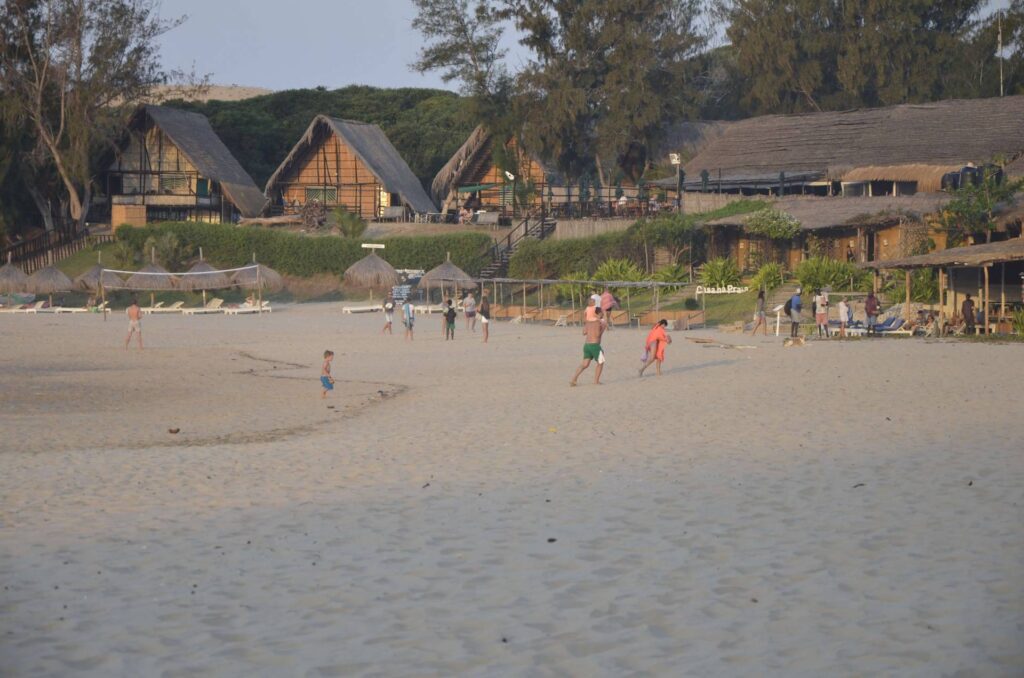
Tofo is a huge, white crescent of sand lined with a village of holiday homes, restaurants, bars and accommodation. The beach is the focal point of all activity. Kids run up and down selling bead bracelets. A man lops the top off a coconut with a panga and hands you a refreshing drink. Vendors press you to buy curios, fish and shells. On that note, responsible tourism asks visitors not to encourage the destruction of marine life by purchasing coral or shells. Reefs globally are under serious threat and tourists play a leading role in this. There’s plenty of other bric a brac to haul home.
Crafts & curios
There’s a lively market at the beach. Remember, the vendors are not necessarily the crafters. Often they’re middlemen who buy stock from elsewhere. A truck from Zambia rolls regularly into town wholesaling the ubiquitous curios you can find everywhere in southern Africa. These are passed off as local crafts in markets as well as in smart shops. For authentic goods, look a bit closer and ask around. There’s plenty of local talent and enterprise. Carpenters, woodcarvers, farmers, basket weavers and seamstresses sell their wares in the Tofo market. Dodge the regrettable glut of Asian imports – especially the batik fabrics and clothing which is not locally made. Still, you’ll find carvings (every home needs a wooden giraffe), trinkets and the usual amusing gimcrackery. Locals shop at the Mercado Central in Inhambane. You’ll be clocked as a turista before you cross the street, so prepare to pay higher prices. But if you take it in your stride you’ll enjoy the noisy melee. At the rear exit you’ll find a tuk-tuk rank. Hire a driver to scoot you around town on a tour.
Activities
Playtime by day is in, on, alongside or under the water. Head for one of the scuba diving operators and either goggle-up or take dive training. This coastline has some of the world’s best dive sites. If diving is not your thing, take an ocean safari to see whale sharks, turtles, manta rays, dolphins, whales and sharks from the comfort of a boat. The Marine Megafauna Foundation, a research and conservation body based at Tofo since 2009, does brilliant work on behalf of large marine species whose populations are suffering under human pressures. Tofo beach is a major international hot spot for manta rays and whale sharks, which are among the key research species. Their international scientists give a fascinating weekly talk at Casa Barry on Tofo beach. It’s a must during your stay. Oh, and they have a volunteer programme… what a cool way to get a beachy glow while notching up environmental Brownie points. In addition to the families and couples who holiday here, Tofo and Barra have a large, ever-changing population of young travellers, eco-volunteers, dive instructors, restaurant workers and surf groupies. It gives the beach scene its happy energy.
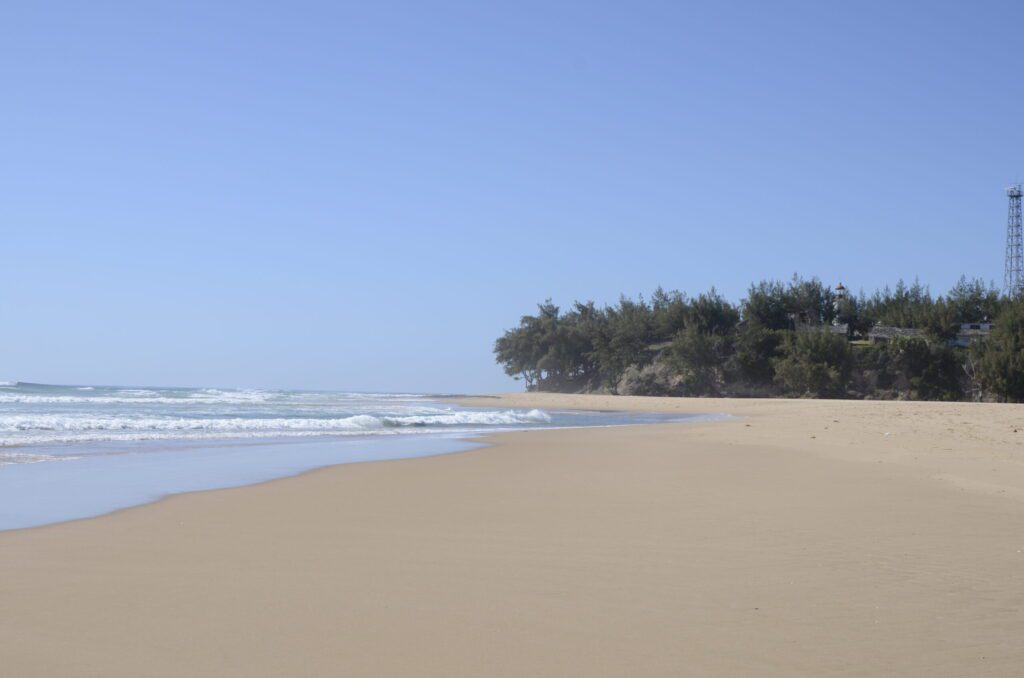
Apart from snoozing on the beach and playing in the waves with the toys you might bring along (no jet skis), there are plenty of organised activities to keep you busy between meals. Try surf lessons, 4×4 quad adventures, snorkeling in the estuary, fishing, horse riding on the beach, yoga, belly dancing, Muay Thai contact fighting or guided tours to Inhambane and farther afield. Among the most popular are the ocean safaris and the day trip to Pansy Island where you can snorkel and swim with starfish and gather pansy shells. Head over to Diversity Scuba to find out more. They have a rooftop café where you can catch up on emails and indulge in a slab of their legendary carrot cake. The best long beach walks are towards Barra Point. The coast is wide, and empty and goes on forever. Barra has a scattering of holiday homes and a couple of cafe bars but no market. Walk up to the picturesque lighthouse on the point. It once housed a keeper but is long abandoned. It’s in a wonderful setting with vantage across the entire bay.
Eat
Fine dining is not an option here, thank goodness. The food at all the restaurants revolves around fresh seafood and fish, accompanied by simple rice, veggies and fruit. The food is basic, happy-go-lucky and usually delicious. You can get pasta, chicken and dishes with a Portuguese undertone. Coconut and cashew nuts make a frequent appearance in unusual ways, such as being stirred through rice with prawns. Be a bit adventurous when eating out. I’ve been pleasantly surprised by the food in some of the less salubrious-looking establishments. Casual cafés abound in Tofo, just stroll around the immediate vicinity of the beach and market and you’ll soon familiarise yourself with them all.
Sleep
Accommodation is plentiful and crosses the spectrum of budgets. It starts at backpacker level. Fatima’s Nest Backpackers has been here for yonks. The rooms are small palm-leaf huts and it also has a campsite. If you plan to travel in summer be warned: the budget accommodation venues have no aircon and the weather gets extremely hot. Did I mention the heat? Extremely. Hot. No. Aircon. Consider yourself warned.
The grandpappy of Tofo establishments is Casa Barry. It’s named after a bloke named Barry who pulled up in a VW campervan back in the 80’s when there was a war and no tourists. He found nothing but beach, coconut groves and the odd insurgent terror attack so he stayed. Today the lodge is surrounded by leaning beefwood trees. It has a big deck restaurant and delightfully simple palm-fronded self-catering chalets. Steps go down to the sand where the brightly painted fishing boats are beached. At the posh end of the accommodation options, there are places like the beautiful eco-conscious Blue Footprints Lodge. Casa na Praia Tofo has spacious rooms that open straight onto the sand. It’s a perfect backdrop for the beautiful and the bronzed and is all rather gorgeous. Following its revamp a few years back, Hotel Tofo Mar is a visual delight. The style is refreshingly sparse and quite trendy. The restaurant and bar open to a beach-facing terrace where lovely waiters bring you icy drinks while you work on your irreversible sun damage without getting sand in your cozzie.

Party pants
You haven’t partied in Tofo unless you’ve danced till dawn at Dino’s Bar. Just walk down the beach towards Barra and you’ll find it. Apart from the wonderfully large bottles of local beer, you must try Tipo Tinto, the local rum, popularly mixed with lurid pink raspberry soda. The horrible stuff is as rough as jet fuel but combined with beach hair, the sea and sand it makes one for the photo album, the sort you look back at and exclaim at your fearless tans and say, “Remember this? Look how skinny young we were.” There are lots of other little beach bar venues where you can meet holidaymakers, dance and enjoy the scene. Keep it clean and be sensible. Crime is relatively low but it’s definitely around so use your noggin and steer clear of trouble.
Don’t foregt to go home
It seems an idyllic existence. Some people come on holiday and forget to leave. I met an engineer who’d arrived fifteen years previously on holiday from building skyscrapers in Dubai. He set up a tent (albeit a biggish, permanent one) on a dune at Barra, and never left. It’s still the home he shares with his staffie. “My wife took more convincing,” he says, scratching the dog behind its ears. Whether you camp, stay in a hotel or decide to opt-out and live on a dune, do make your way to this corner of Africa. You needn’t pack the hens.