

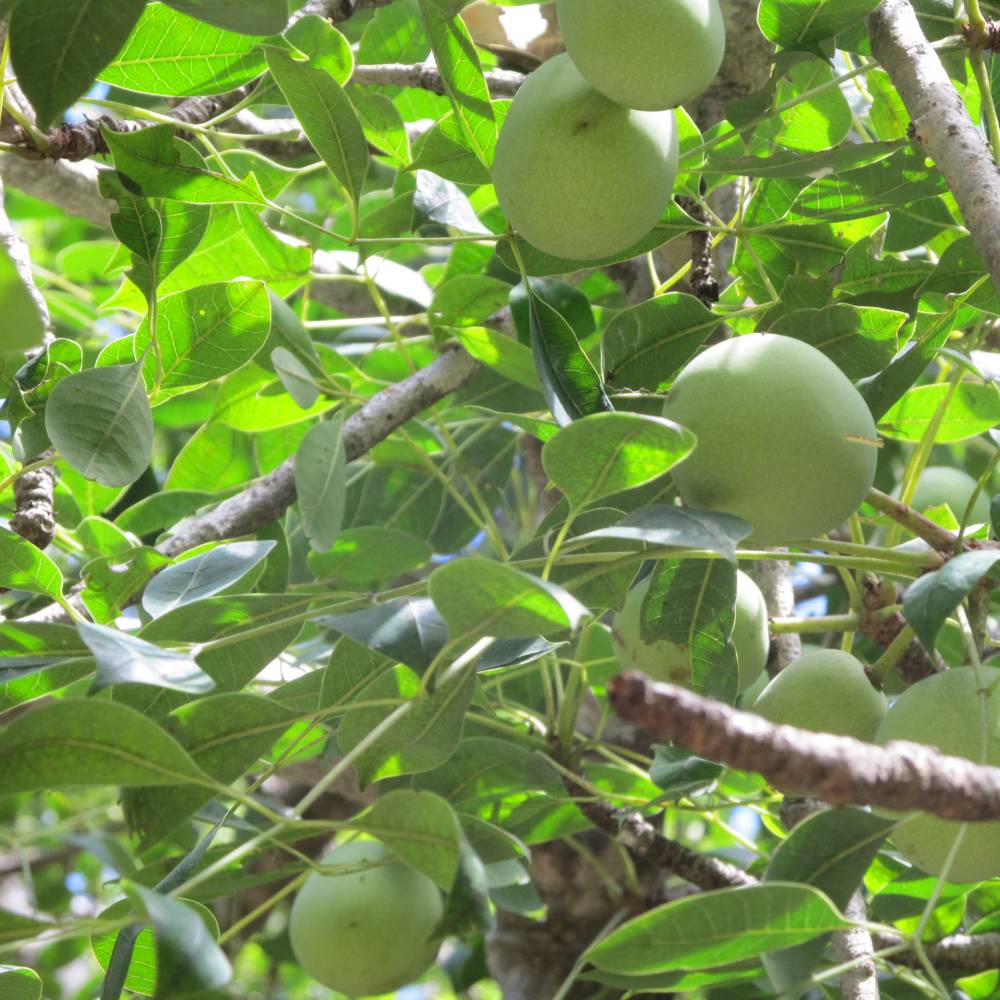
Marula trees are unique to one small area of the planet, hot, frost-free subequatorial Africa. Valued for its special fruit, marula trees cannot be cultivated commercially so the fruit must be wild harvested to make the world famous Amarula Cream Liqueur. I trekked to the back of beyond to witness the handpicked wild harvest.
At first it’s just me, squinting up at a floating vulture and a rocky outcrop outlined against an electric blue sky, wondering where the harvest was that I’d driven hours through ferocious heat to see. So far, no harveters to be found. Since early morning I’ve eased my SUV along bumpy tracks into the bush in the north Limpopo Province where the Tropic of Capricorn crosses the continent, peering into the scrub expecting to see some sign of activity. The vegetation is rough, dotted with thorn bushes and thatch grass, the sort of place that in the old days would have made people mutter under their breath about lions. There are no lions now. The only claws are the finger-length ones on thorn trees that catch your hair as you pass. Scattered among the thorns trees and tall grass are big trees with distinctive, pockmarked grey bark. This is marula country and I’m here to see the annual marula wild harvest.
Capricorn heat
It takes place during the most intense heat of late summer, the perfect temperature to ripen the yellow plum-like marula. The fruit drops off trees growing wild and is gathered by people from local communities, who use anything they can find or commandeer to leverage this seasonal bounty which they sell to the Amarula processing plant. Later in the day I get to see the festive arrivals of buckets of fruit balanced on poles across women’s shoulders; in brown sacks heaved by donkeys led by small boys; of fruit piled loose into car boots; in bulging plastic carrier bags knotted tight at the top and piled into white minibus taxis. But I’m unaware of any of this in the morning as I wait and watch the vulture catch a current and glide higher. Right now it’s the only thing moving.
Waiting
Around mid-morning a handful of ribby cattle mooch quietly into view. The lead beast has a homemade bell around her neck on a piece of frayed twine. It clinks tunelessly as she forages. In their wake a flicker of colour and movement catches my eye. A line of women walking single file materializes from nowhere. They weave through the bush along a thin path that wriggles red through the long lion grass among the thorn trees. Their bright traditional costumes feature heavily pleated skirts belted with multiple strings of colorful beads. The skirts swing and twirl as they come surefooted through the bush.
Gently, gently
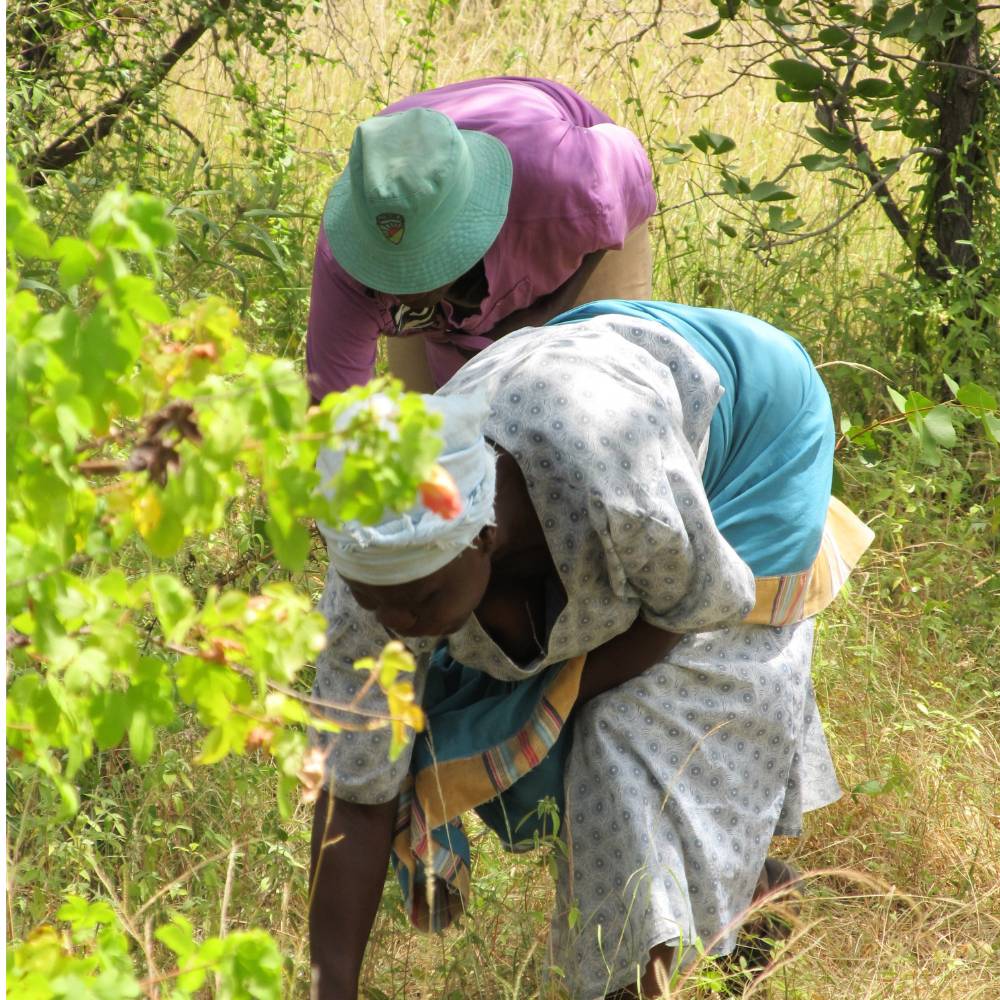
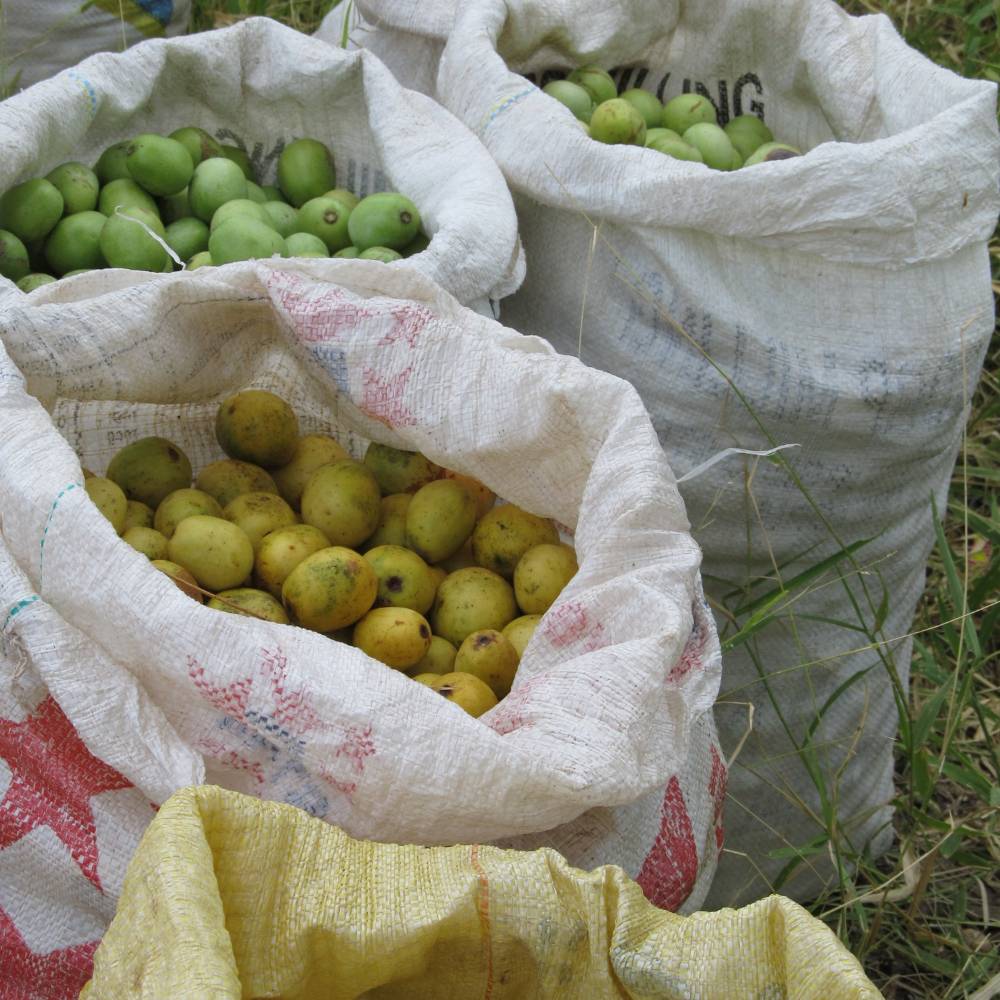
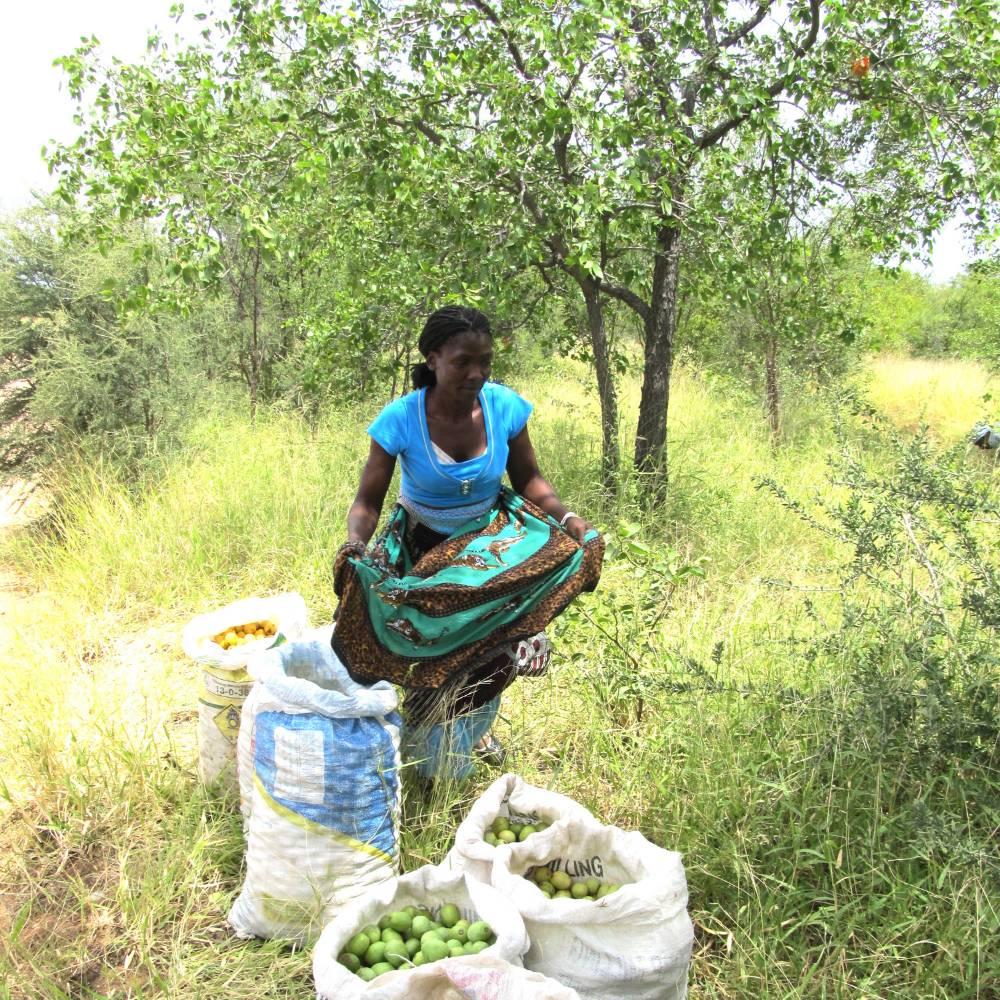
This is how the marula harvest looks on a hot blue day near Phalaborwa. A vulture hangs in the sky. Down among the thorn scrub and marula trees it is dim but not cool. The women spread out and choose spots to work, never far from one another, moving softly through the undergrowth and curving from hips upholstered in their bright, swinging skirts. Their hands run through the grass among twigs and stones, and return with fallen fruit, patting it into yellow mounds under each tree, destined for large white sacks which will be collected later by a vehicle. A woman holds up her green apron with one brown hand while the other hand feeds it smooth gold fruit, tireless as a mother bird. From time to time they straighten up, stretch their backs, and slide shy smiles at me. Their voices murmur ceaselessly in the dense hot shade. What do they talk about all day I wonder? Probably, like women everywhere, about their children, their old people, their women’s work. Tinkle, tinkle says the cowbell over and over in the airless brush. Bars of light flicker over the women as they move; shade then light then shade. As the sun softens its grip, they file back along the red smooth path to their village taking the cattle with them. Tomorrow they’ll be back, and most days after that until summer fades and the marula fruit is over for another season.
Cream and gold
Amarula Cream Liqueur is an award-winning staple found on drinks trays from Shanghai to San Francisco. The core ingredient is made from the fruit of the marula tree (Sclerocarya birrea) found in subtropical Africa. After the harvest, the golden fruit is distilled into a spirit that gets aged in French oak for two years. After that, it’s blended with heavy cream to create the velvety drink we know as Amarula Cream.
Photos Bev Tucker / Distell