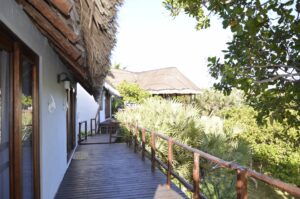
A boa vida (the good life) is the best way to describe this dreamy house that gazes over the Indian Ocean. With its whitewashed interiors and Mozambique vernacular, it’s always summer in this dunetop haven. Actually, it was mid-winter when I visited, but one of the many advantages of Mozambique’s subtropical climate is that temperatures seldom if ever dip below subzero. Winter here means long blue days spent tumbling between hammocks, the pool, and vast stretches of white beaches without the intense heat and humidity of the summer months. If Gypset travel cred is the goal, this house has it in spades, and much of that allure is lent by its remoteness.
Inhambane (pronounced In-Yam-Ban) is one of the oldest settlements on Mozambique’s east coast. Dhows plied their trade in these waters as early as the 11th Century. When the Portuguese explorer Vasco da Gama rounded Africa later in the 15th Century he anchored here to replenish his ships. He took an immediate liking to the area and named it Terra de Boa Gente ‘Land of the Good People’. Today the town is a sleepy provincial capital that still bears traces of a gracious Portuguese colonial heritage and remnants of the country’s Art Deco heyday which was violently dethroned by the now-rotting Soviet school of brutalist architecture courtesy of A Revolução.
Barra & Tofo
Ponto do Barra is one of several small beach communities dotted along the coast, each of which has its own flavour. The nearest of these is Tofo, a popular destination boasting a boho beach vibe, busy market, and tourist nightlife. Barra, as it’s called locally, has so far escaped the tourism hustle. The owner of the house purchased a section of dune here 20 years ago, and built his holiday refuge from scratch. He negotiated the sale with the family that still owns and lives in the coconut palm grove at the bottom of the dune and employs household staff from among this family, thus maintaining a close relationship with the village.
“The view from the top of the dune made this site an easy choice,” he says, “and that was almost the only easy part.” Every pole, brick and nail had to be hauled up by hand because no vehicle can access the loose sand. To this day no road exists. It gives the house it’s exclusive separateness, and also gives visitors’ legs a workout in traipsing up and down the dune when they venture away from base. After drilling a borehole to supply potable running water, the house took shape under the owner’s management. “It was important to use local crafters and builders, and to support the local economy.”
As a creative couple involved in the arts, the owner and his wife had a keen sense of the aesthetic they wanted. The result is a thoughtful floor plan decorated with a relaxed, multi-cultural flavour that calls on natural materials found in the immediate vicinity and surrounding region. One of these is the coco palm from groves in area. Locals use palms to meet a huge variety of needs – the trees provide everything from food and drink to shelter, practical everyday implements, personal adornment and more. In the construction of La Vida Jax, the most obvious use can be seen in the palm frond roof thatch. “This was the first choice over other types of roofing because it reflects the site’s history. Our roof is made from palm trees planted more than 80 years ago by Portuguese settlers. These trees are still supplying food and materials.”
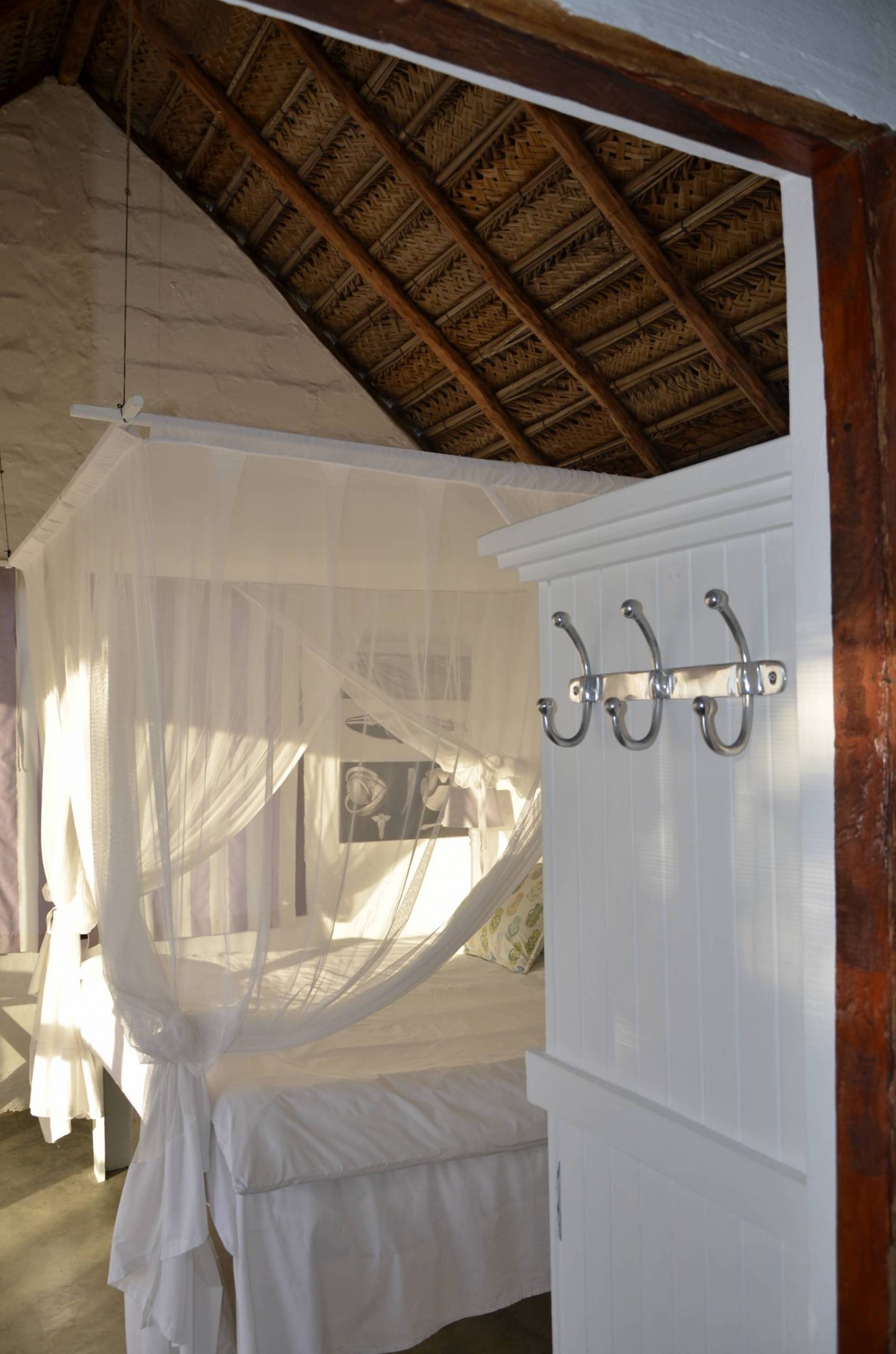
It was an excellent choice. The thickly woven leaves provide a highly-practical, well-insulated roof and with their woven patterns left visible they make attractive, open ceilings. The build utilised local bricks, which are hand-made and fired in the ovens you see dotted all over the country. These rural brickyards produce beautifully light, strong bricks and paving in pale gold-beige tones, and every brick bears the imprint of a human hand.
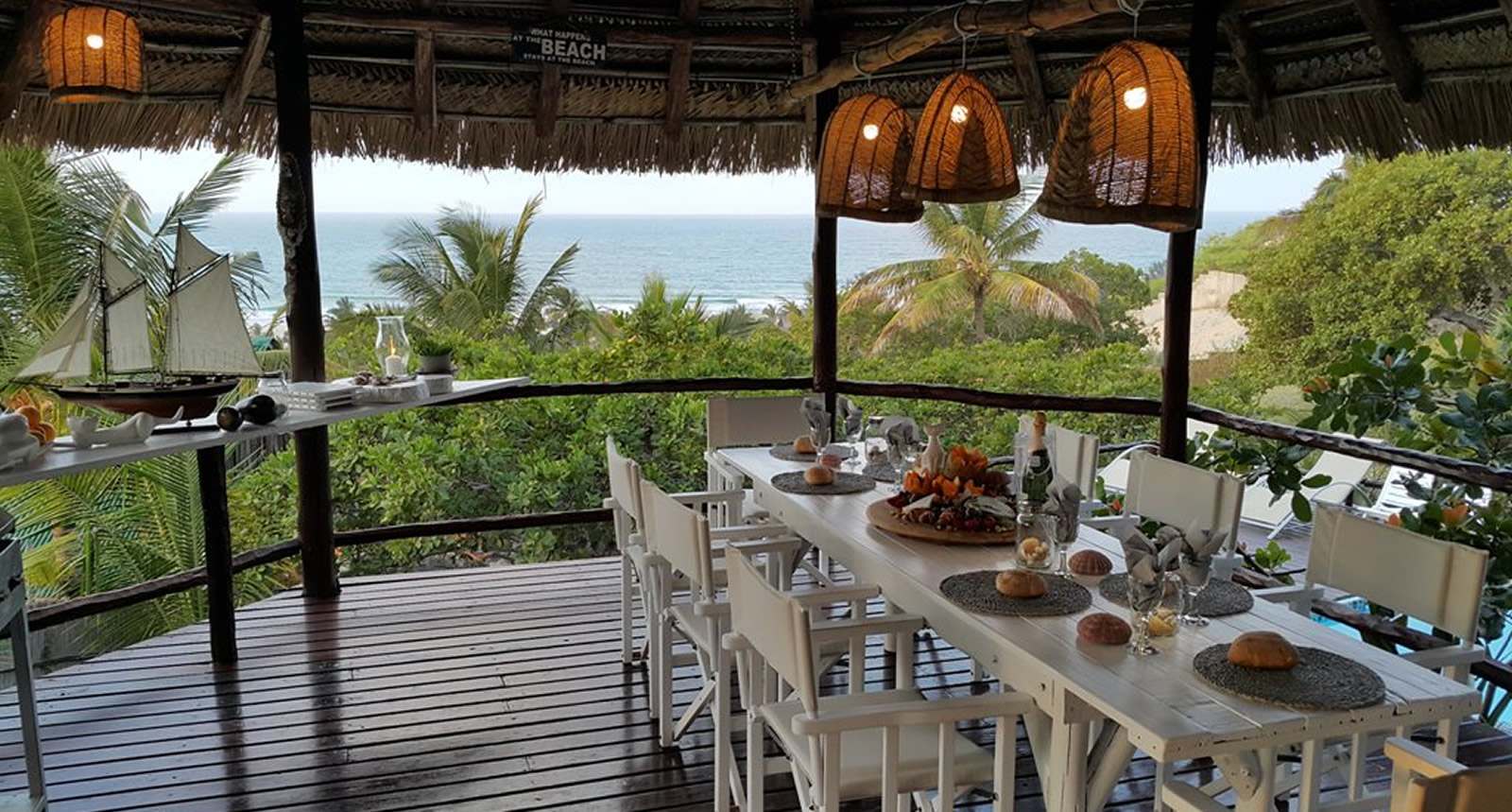
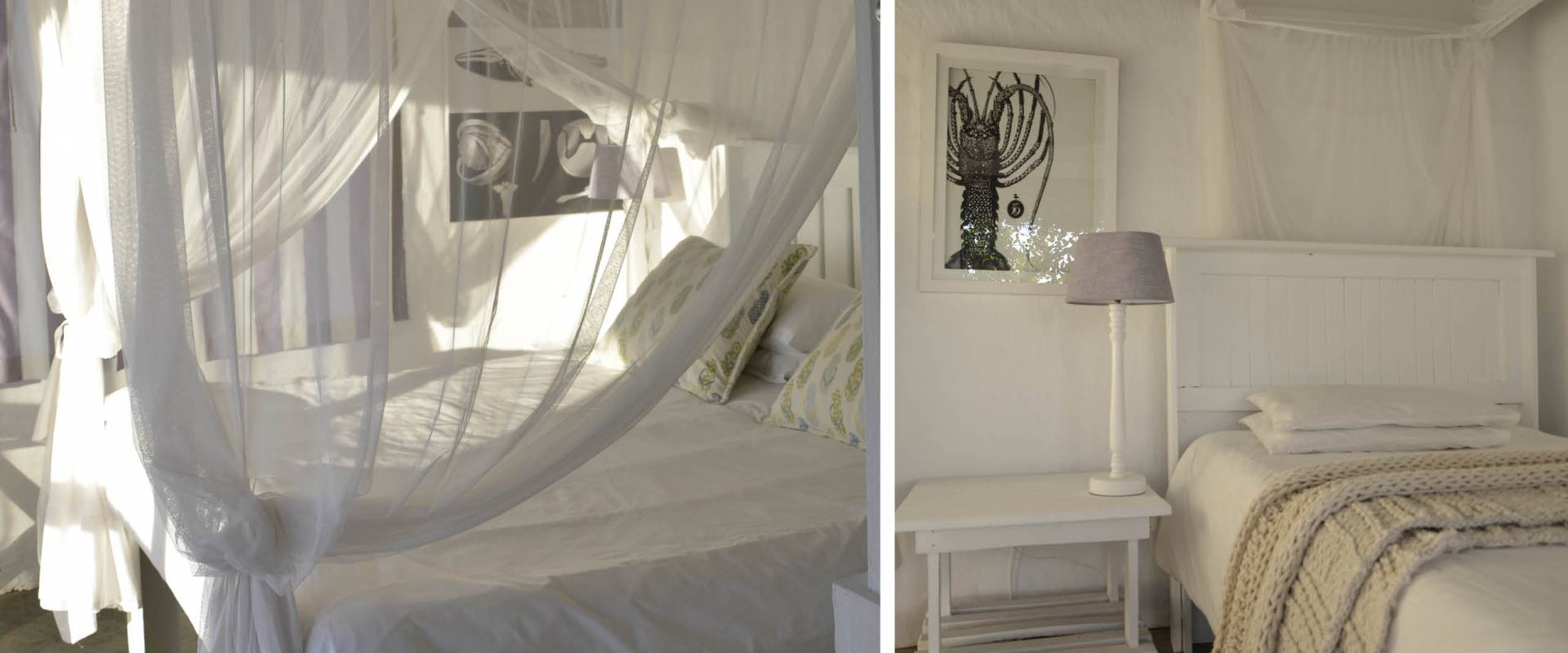
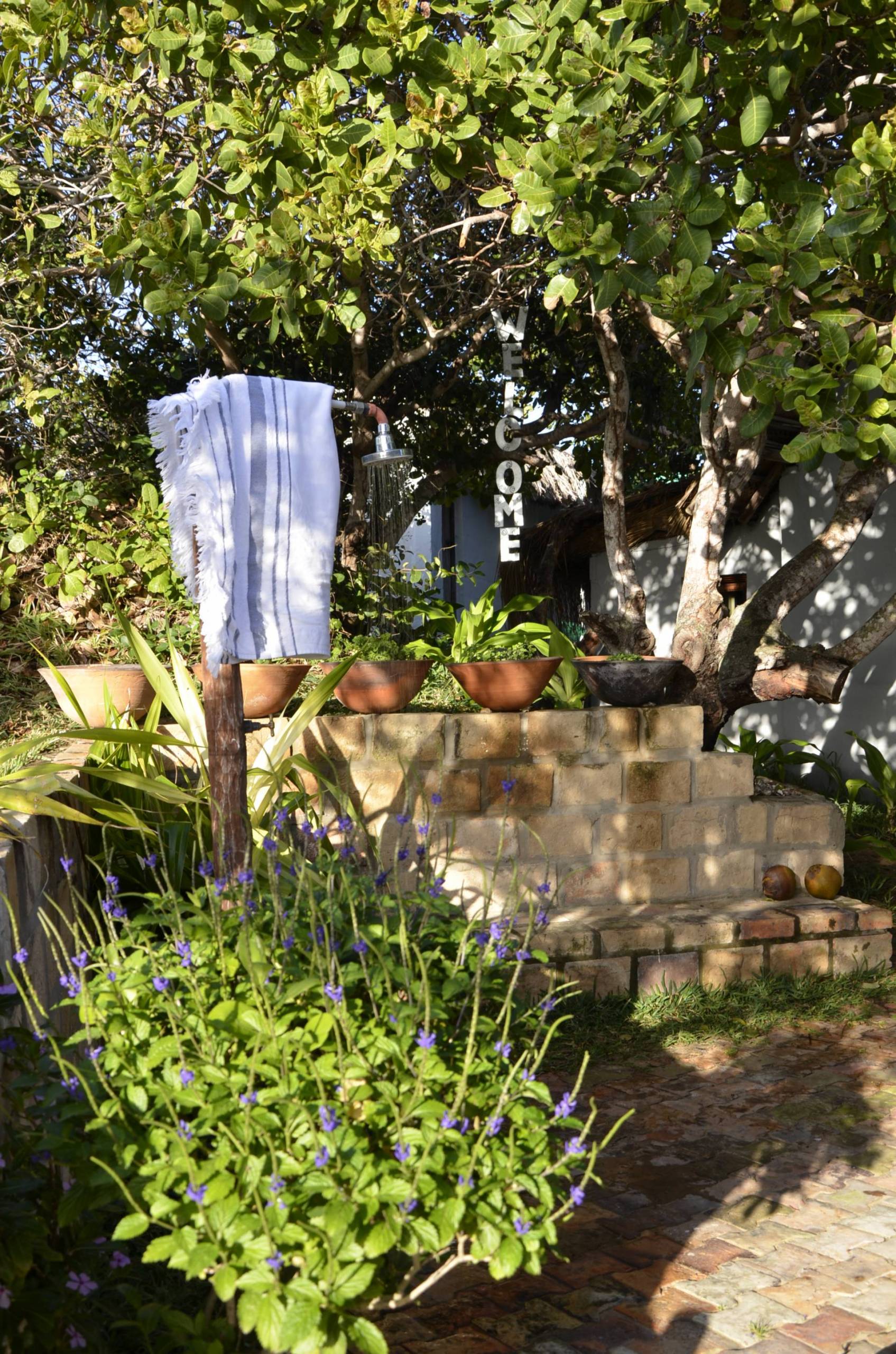
The palm-thatched entertainment deck at the centre of the house is cool by day and protected from wind at night. It’s furnished with a long table, gas outdoor hob, and endless views. Every room in the house faces the sea. The bedrooms are in a separate building linked to the main house via a wooden walkway. Each room opens via sliding glass doors into white interiors that are usually pushed wide to embrace the views and soft air. Visitors can lie in bed watching the glittering bay, hear the waves and feel the breeze as it rustles the palm thatch overhead.
Interior
Apart from importing an industrial size glass-fronted fridge that had to be delivered at immense cost by courier, most of the furniture and fittings were made or purchased locally. The overall effect is of a house that materialised effortlessly out of its surroundings, but the owner acknowledges the extent of hunting and gathering, as well as local knowledge, it took to source items.
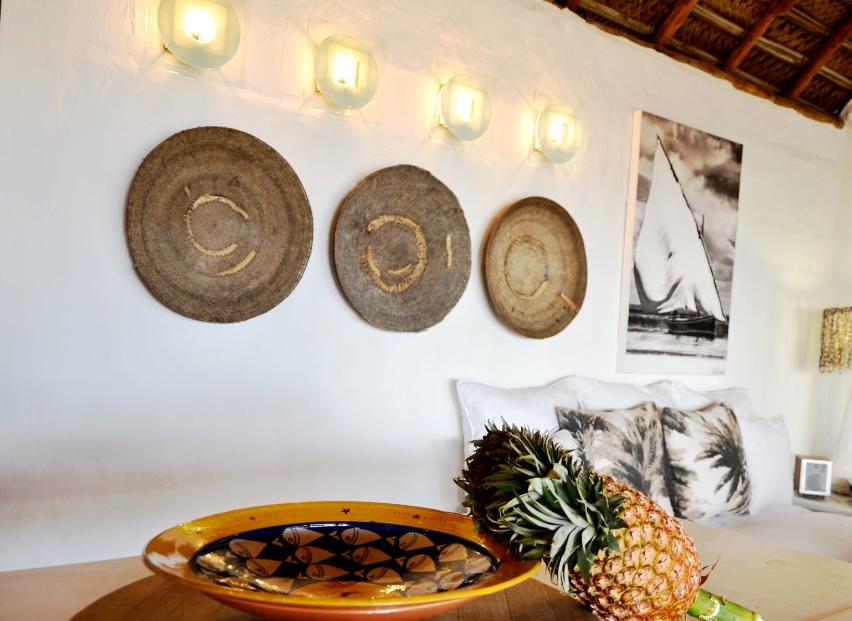
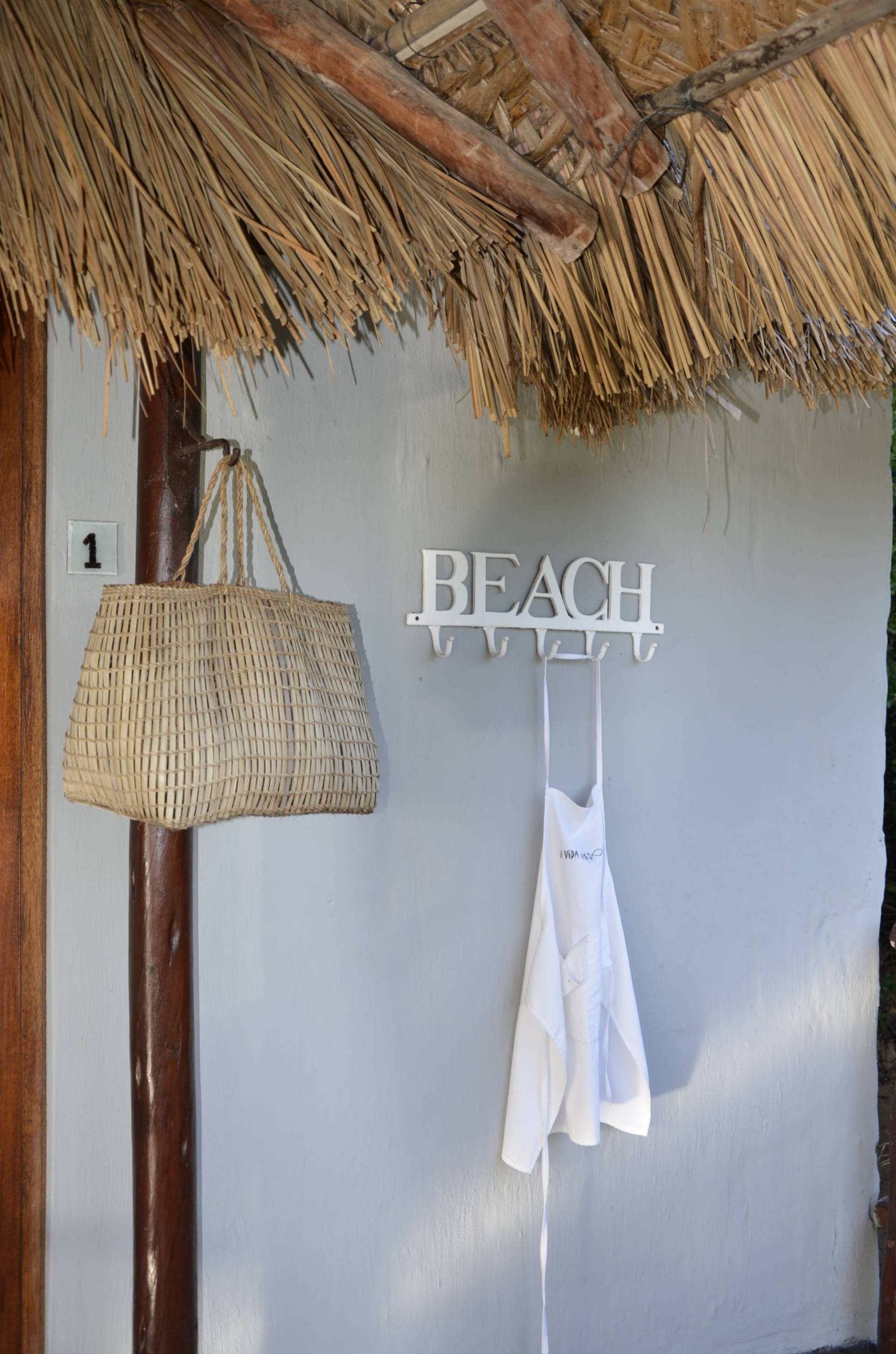
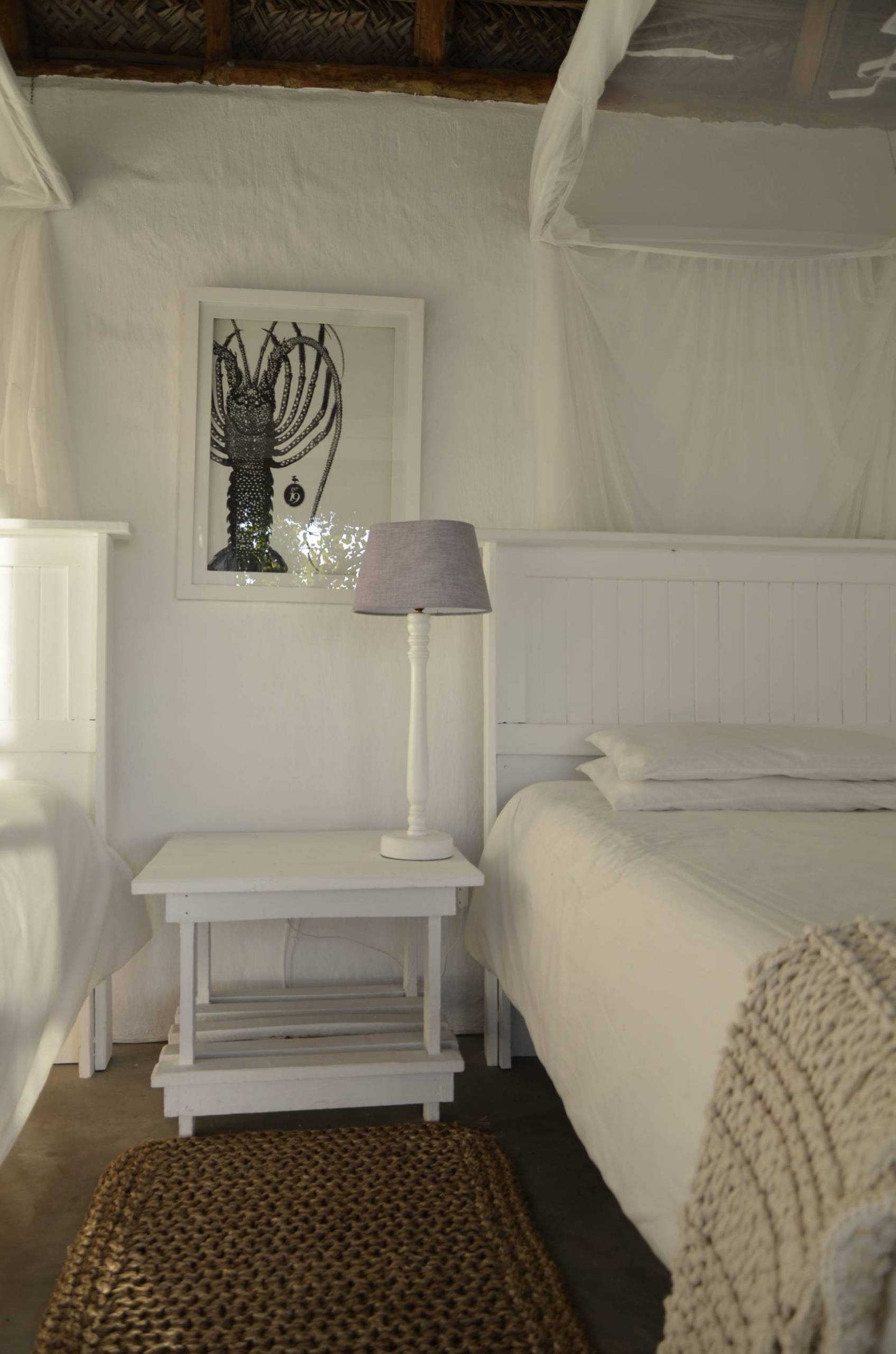
Most of the furniture was hand-built by local carpenters, many of whom work as traditional boat builders in workshops dotted among the palm groves in the district. The chandelier in the living room was handmade by the owner. He also made the three light fittings draped with grey Zulu beads suspended over the kitchen table, and the decorative glass light fittings in the living room. The floors are softened by locally made woven grass mats. The huge dhow dominating the lintel over the front door came from a Mozambican craftsman. With its lofty thatch and exposed timber beams; the soft gleam of polished concrete floors; whitewashed walls and furniture; woven grass mats; bead-draped chandeliers and handmade decorative touches, the place breathes simple elegance. Some items – like the upturned fishing basket shades on the deck – were found in the Mercado Central de Maputo, the huge fresh produce and crafts market in the capital. It’s a wonderful place to explore but this teeming market can be an intimidating adventure and visitors are advised to hire a reputable guide. For a charming market experience closer to home, there’s the Inhambane mercado.
Plan Your Stay
La Vida Jax is available for private hire. The house has four bedrooms of which two have en suite facilities, and two share an inter-leading bathroom. The house comes fully equipped with quality linen, cutlery, crockery and utensils. The staff take care of cleaning and help visitors negotiate with vendors who ply thier wares along the beach and in stalls nearby. Buying locally grown salads, fruit, fresh fish and famous Portuguese-style bread from the local vendors every morning is one of the nicest things about this holiday.
Getting there
By road: Tofu is 500km north of Maputo. If travelling by road from Johannesburg, the journey covers more than 1000km – about 550km from Johannesburg to the border at Komatiepoort plus another 500km from the border to Inhambane. Most people break the road trip with an overnight stay close to the border (The Blue Anchor Inn is an established and popular favourite).
By air: Inhambane is the nearest town with an airfield and somewhat regular domestic flights from South Africa. You can taxi from Inhambane to Barra. Ask the driver to take you to La Vida Jax at Ponto do Barra. This is the closest it gets to a street address around here but the driver will find it easily.
Good to Know
This coastline is a migration path for humpback whales that swim south to give birth to their young in the warm tropical waters. The best months to sight these great beings is from July to November. The Marine Megafauna Foundation has a permanent research facility based in nearby Tofo. Scientists based here conduct world class research on marine life.
The summers are extremely hot; the winters are mild, warm and temperate. The rainy season is in summer (in the Southern Hemisphere this is January, February, March and December). The hottest month is January, and the coolest and driest and with the least wind is in August. December is the wettest month. August is my favourite month to visit.